

The good deal for € 70 with messecretsdevoyage.com :
it is a saving of between great savings
ahead!
for a customized, cheaper
book-direct and already
tested trip !
TANZANIA, 7 days / 6 nights
Cost of my trip: 1652€
Cost of my trip: 1652€
Signification :
The name Tanzania is a portmanteau of Tanganyika and Zanzibar. The two states united in 1964 to form the United Republic of Tanganyika and Zanzibar, which later the same year was renamed the United Republic of Tanzania. TANganyika + ZANzibar = Tanzania
The name Tanzania is a portmanteau of Tanganyika and Zanzibar. The two states united in 1964 to form the United Republic of Tanganyika and Zanzibar, which later the same year was renamed the United Republic of Tanzania. TANganyika + ZANzibar = Tanzania
Area : 945.087 km²
Capital : Dodoma
State : Republic, member of Commonwealth
Chief of state : John Magufuli
Government : presidential, parliamentary and mutipartism
National day :
april 26 (indepedence)
Jetlag :
+2:00 in winter and +1:00 in summer
Capital : Dodoma
State : Republic, member of Commonwealth
Chief of state : John Magufuli
Government : presidential, parliamentary and mutipartism
National day :
april 26 (indepedence)
Jetlag :
+2:00 in winter and +1:00 in summer
Population : 55.451.343 (est. 2018)
Languages : Swahili, english
Ethnics:
mainland - African 99% (of which 95% are Bantu consisting of more than 130 tribes), other 1% (consisting of Asian, European, and Arab); Zanzibar - Arab, African, mixed Arab and African
Religions :
mainland - Christian 30%, Muslim 35%, indigenous beliefs 35%; Zanzibar - more than 99%
Languages : Swahili, english
Ethnics:
mainland - African 99% (of which 95% are Bantu consisting of more than 130 tribes), other 1% (consisting of Asian, European, and Arab); Zanzibar - Arab, African, mixed Arab and African
Religions :
mainland - Christian 30%, Muslim 35%, indigenous beliefs 35%; Zanzibar - more than 99%
Geography :
Tanzania is located eastern Africa, bordering the Indian Ocean, between Kenya and Mozambique. Forests grow mainly in the highlands and along the coast. Elsewhere there are steppe and savanna grasslands. Mount Kilimanjaro in the north, is the highest point on the continent. Tanzania contains three of Africa's best-known lakes-Victoria, Tanganyika, and Nyasa. There is more than 100 000 km2 national parks, hunting reserves and controlled zones. Natural resources : coffee, coton, sugar,hydropower, tin, phosphates, iron ore, coal, diamonds, gemstones, gold, natural gas, nickel.
History :
Shortly after achieving independence from Britain in the early 1960s, Tanganyika and Zanzibar merged to form the nation of Tanzania in 1964. One-party rule came to an end in 1995 with the first democratic elections held in the country since the 1970s.
Tanzania is located eastern Africa, bordering the Indian Ocean, between Kenya and Mozambique. Forests grow mainly in the highlands and along the coast. Elsewhere there are steppe and savanna grasslands. Mount Kilimanjaro in the north, is the highest point on the continent. Tanzania contains three of Africa's best-known lakes-Victoria, Tanganyika, and Nyasa. There is more than 100 000 km2 national parks, hunting reserves and controlled zones. Natural resources : coffee, coton, sugar,hydropower, tin, phosphates, iron ore, coal, diamonds, gemstones, gold, natural gas, nickel.
History :
Shortly after achieving independence from Britain in the early 1960s, Tanganyika and Zanzibar merged to form the nation of Tanzania in 1964. One-party rule came to an end in 1995 with the first democratic elections held in the country since the 1970s.
Here you will find all useful information and advice: international flight (compare flights on home page), insurance, passport, travel information, ...and choose the period that suits you
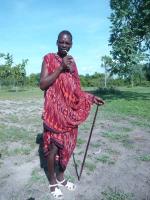
Reserve directly with the local contact
 In Dar es Salaam Rama speaks English.
Rama is head of sales for a Tanzania tour operator, which was established in 1995, owned by an English and a Tanzanian with over 20 years experience in Southern Tanzania. Creators of tourism activities in Saadani National Park and Selous Game Reserve. The...
In Dar es Salaam Rama speaks English.
Rama is head of sales for a Tanzania tour operator, which was established in 1995, owned by an English and a Tanzanian with over 20 years experience in Southern Tanzania. Creators of tourism activities in Saadani National Park and Selous Game Reserve. The...Read more

Gallery